
The global logistics industry is entering a new era as major companies invest heavily in autonomous delivery systems powered by artificial intelligence, robotics, and self-driving technologies. With e-commerce demand continuing to grow worldwide, logistics providers are searching for faster, more efficient ways to deliver goods. Autonomous delivery technology is rapidly emerging as one of the most transformative solutions for the future of supply chains.
Companies such as Amazon, FedEx, UPS, and several technology startups are investing billions of dollars into robotic delivery systems, self-driving trucks, and autonomous drones. These technologies aim to reduce delivery times, cut operational costs, and solve labor shortages that many logistics companies currently face. Industry analysts say the autonomous last-mile delivery market is expected to grow rapidly in the coming years as companies race to automate the final stage of delivery from warehouses to customers’ doorsteps.
One of the biggest motivations behind these investments is the explosive growth of global e-commerce. Online shopping continues to increase every year, creating enormous pressure on logistics networks to deliver millions of packages quickly and efficiently. Autonomous delivery robots, drones, and AI-powered vehicles can operate around the clock, making them attractive solutions for companies looking to scale their delivery operations without dramatically increasing labor costs.
Amazon has been one of the most aggressive investors in automation. The company has developed a range of robotic systems that help sort, move, and deliver packages inside warehouses and across delivery networks. Autonomous robots are now capable of lifting heavy loads and transporting packages throughout fulfillment centers, helping speed up the packaging and shipping process.
The company recently announced plans to build a massive robotics-powered fulfillment center in Queensland, Australia, with a $750 million investment. The facility will use advanced robots capable of lifting large loads and processing more than 125 million packages each year, significantly improving delivery speed across the region.
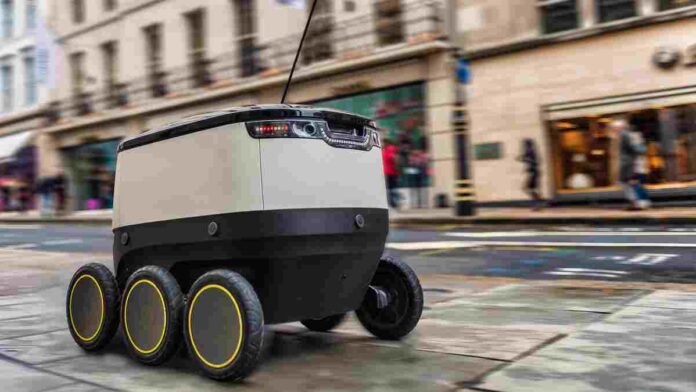
Outside warehouses, autonomous delivery systems are also appearing in city streets. Food delivery platforms and logistics companies are launching pilot programs that use small robots and drones to deliver meals and packages directly to customers. In Philadelphia, autonomous delivery robots are already operating on city sidewalks through a partnership between Uber Eats and robotics developers. These small robots travel short distances from restaurants to nearby customers, offering a glimpse of how urban delivery could look in the near future.
Similarly, drone delivery services are expanding rapidly. In the United States, a new pilot program allows customers to receive food orders delivered by drones within minutes. The aircraft lowers packages to the ground using a cable system, allowing deliveries without the need for a human courier. If successful, such programs could be expanded to many cities across the country.
Startups are also playing a key role in advancing autonomous logistics technology. Companies like Serve Robotics, Starship Technologies, and Nuro are developing fleets of small delivery robots designed for urban environments. These robots navigate sidewalks using cameras, sensors, and artificial intelligence to avoid obstacles and deliver items safely to customers.
Meanwhile, autonomous trucking companies are developing driverless freight vehicles capable of transporting goods between distribution centers. These trucks can operate continuously with minimal human supervision, potentially transforming long-distance logistics and significantly reducing transportation costs.
Experts believe the next decade will see widespread adoption of autonomous delivery technologies across multiple industries. As robotics, artificial intelligence, and sensor technology continue to improve, autonomous logistics systems are expected to become safer, faster, and more reliable.
While challenges remain, including regulations, safety concerns, and infrastructure requirements, the direction of the industry is becoming increasingly clear. Autonomous delivery systems are no longer experimental concepts but rapidly evolving technologies that could redefine how goods move across cities and around the world. For logistics companies competing in a fast-paced digital economy, investing in automation may soon become not just an advantage, but a necessity.

The author at The Union Herald is passionate about uncovering truth, amplifying diverse voices, and delivering content that informs and inspires. With a sharp eye for detail and a deep commitment to integrity, their work bridges communities through thoughtful analysis and impactful storytelling.